Hola! Bonjour! Hi :D. This week we look at yet another invasive species that has affected the marine environment, the sea walnut
(Scientific name: Mnemiopsis leidyi).
 |
| The Sea Walnut. ©Marco Faasse, World Register of Marine Species |
Distribution
The sea walnut is native to the Atlantic coasts of North and South American regions but somehow founds its way to the Black Sea in the 1980's. Its population then rapidly expanded into nearby territories of the Caspian, Azov, Marmara, Aegean seas and even the Mediterranean. The mode of transport for this invasive species was determined to be due to the dumping of ballast water from ships.
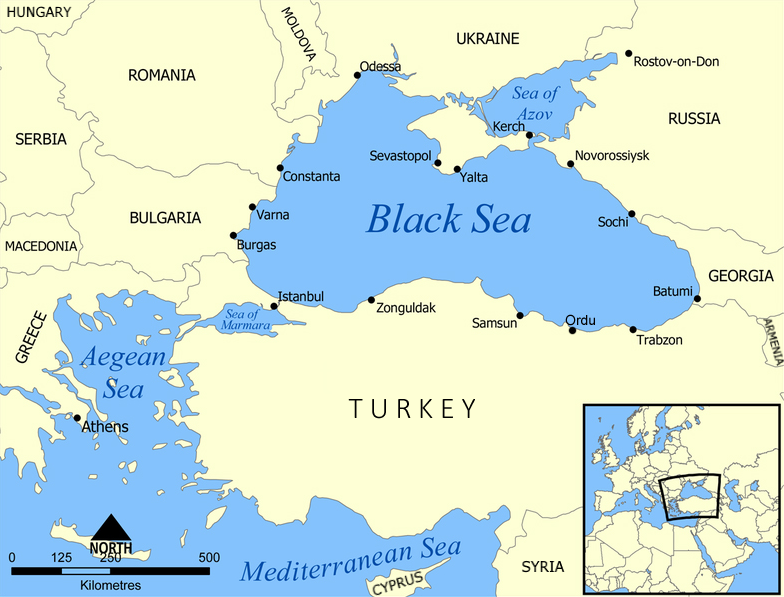 |
| Map showing the seas in which the Sea Walnut Invaded. ©Wikimedia.org |
What made this particular IAS so successful?
This IAS has the ability to survive in a wide range of temperatures and ocean salinities. Therefore the adaptation to new environments was not a problem for this species! Scientists have identified this species to exist in the sea of Azov with a salinity of 3% and conversely in a salinity of 39% in the eastern Mediterranean! Furthermore, they have been observed to exist in temperatures as low as 4°C and as high as 31°C ! In my opinion this wide range of tolerance levels definitely lends to the invasive capabilities of this Jelly !
Impact
This unsuspecting jelly rapidly multiplied due to the occurrence of hermaphroditic individuals and can therefore self-fertilize ! Within its invasive regions, were virtually non-existent, therefore ecosystem control of this species is very difficult. Its insatiable appetite for zooplankton and small fish eggs and larvae has led to drastic change in ecosystem dimensions and the fisheries sector of these areas especially countries surrounding the Black and Caspian Seas such as Russia, Turkey and Romania. The degradation of the Caspian sea ecosystem rippled all the way up to one of the top predators, the Caspian Seal !
Methods of Mitigation
Methods of Mitigation
In the 1990's, scientists agreed that the only way to manage this problem of this devastating species in the Black and Azov sea was the introduction of an exotic predator! The Beroe ovata, another jelly was seen as the only means to reduce the population of the invasive Mnemiopsis! It was said that the introduction of the predatory jelly drastically reduced the Mnemiopsis populations in the Black Sea and helped the ecosystem recover. However, I believe that the use of exotic species to combat another exotic species has several controversial connotations. Won't this species eventually show its true invasive nature and begin to degrade the local ecosystems?

