* Welcome ! Hope you find the information in this blog relevant and helpful ! Feel free to drop a comment on any post. Happy Blogging ! *

Friday, 6 November 2015

The Green Crab

Hola! Bonjour! Hi :D. This week we look at a molluscan invasive species that has affected the marine environment, the Green Crab.
(Scientific name: Carcinus maenas). 

The Green Crab. ©MISA

Distribution


The Green Crab is native to Europe and Northern Africa but has found its way to the coasts of North America, parts of South America, South Africa and southern Australia. It was first discovered in 1817 on the east coast of North America. Its mode of introduction into these exotic habitats are due to several reasons: ballast water from ships, attachment to the hull of ships and migration on surface sea currents. 


Global distribution of Green Crab. Stars represent local regions, circles represent exotic introductions, triangles represent failed survival of introduction. ©Her Majesty the Queen in Right of Canada

What made this particular IAS so successful?

Yet again this IAS is another one of those invasive species with insane tolerance ranges. I think this is the most extreme. The adult Carcinus maenas population can:
- Exist in salinities between 4 and 54%!
- Survive in temperature ranges of 0-33°C!
- Can go without eat for up to 3 MONTHS!!!

However this species is as voracious a predator as the lionfish. It feeds on a wide range of organisms including mollusks bivalves and crustaceans. 


Impact

Just like every other invasive species we've examined, this voracious predator has greatly impacted marine ecosystems and on commercial fisheries. Reports have shown that this invasive species has resulted in the loss of nearly $44 million dollars in the commercial fisheries sector. This species has directly affected juvenile fish populations resulting in the reduction of the adult population of fish for commercial purposes. 


Methods of Mitigation
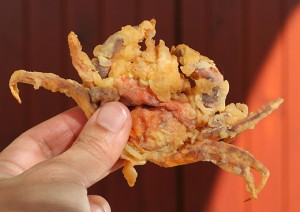
Fried Green Crab. © The Earth Invaders

With this species, native organisms have fought back to protect their ecosystem. In North America, the Chesapeake blue crab (Callinectes sapidus) was observed to drastically reduce the green crab population resulting in environmental control of the organisms. Many anthropological ways have been implemented as well such as the commercializing of said exotic species. Yet another example of how the implementation of the over exploitative nature of humans to combat yet another invasive species.  


Friday, 30 October 2015

Invasion of the Sea Walnut

Hola! Bonjour! Hi :D. This week we look at yet another invasive species that has affected the marine environment, the sea walnut 
(Scientific name: Mnemiopsis leidyi). 

The Sea Walnut. ©Marco Faasse, World Register of Marine Species


Distribution

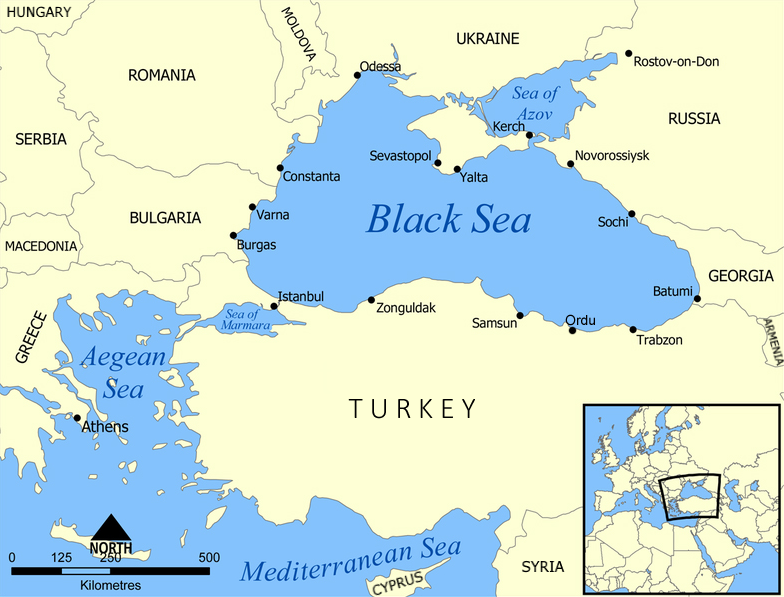
The sea walnut is native to the Atlantic coasts of North and South American regions but somehow founds its way to the Black Sea in the 1980's. Its population then rapidly expanded into nearby territories of the Caspian, Azov, Marmara, Aegean seas and even the Mediterranean. The mode of transport for this invasive species was determined to be due to the dumping of ballast water from ships. 

Map showing the seas in which the Sea Walnut Invaded. ©Wikimedia.org


What made this particular IAS so successful?

This IAS has the ability to survive in a wide range of temperatures and ocean salinities. Therefore the adaptation to new environments was not a problem for this species! Scientists have identified this species to exist in the sea of Azov with a salinity of 3% and conversely in a salinity of 39% in the eastern Mediterranean! Furthermore, they have been observed to exist in temperatures as low as 4°C and as high as 31°C ! In my opinion this wide range of tolerance levels definitely lends to the invasive capabilities of this Jelly !

Impact

This unsuspecting jelly rapidly multiplied due to the occurrence of hermaphroditic individuals and can therefore self-fertilize ! Within its invasive regions, were virtually non-existent, therefore ecosystem control of this species is very difficult. Its insatiable appetite for zooplankton and small fish eggs and larvae has led to drastic change in ecosystem dimensions and the fisheries sector of these areas especially countries surrounding the Black and Caspian Seas such as Russia, Turkey and Romania. The degradation of the Caspian sea ecosystem rippled all the way up to one of the top predators, the Caspian Seal !


Methods of Mitigation

In the 1990's, scientists agreed that the only way to manage this problem of this devastating species in the Black and Azov sea was the introduction of an exotic predator! The Beroe ovata, another jelly was seen as the only means to reduce the population of the invasive Mnemiopsis! It was said that the introduction of the predatory jelly drastically reduced the Mnemiopsis populations in the Black Sea and helped the ecosystem recover. However, I believe that the use of exotic species to combat another exotic species has several controversial connotations. Won't this species eventually show its true invasive nature and begin to degrade the local ecosystems? 

Friday, 23 October 2015

The LionFish Invasion

Hola! Bonjour! Hi :D. This week we look at one of the most voracious invasive species to affect the marine environment, the lionfish 
(Scientific name: Pterois volitans). 


The Red Lionfish.©Bent Christensen
Distribution
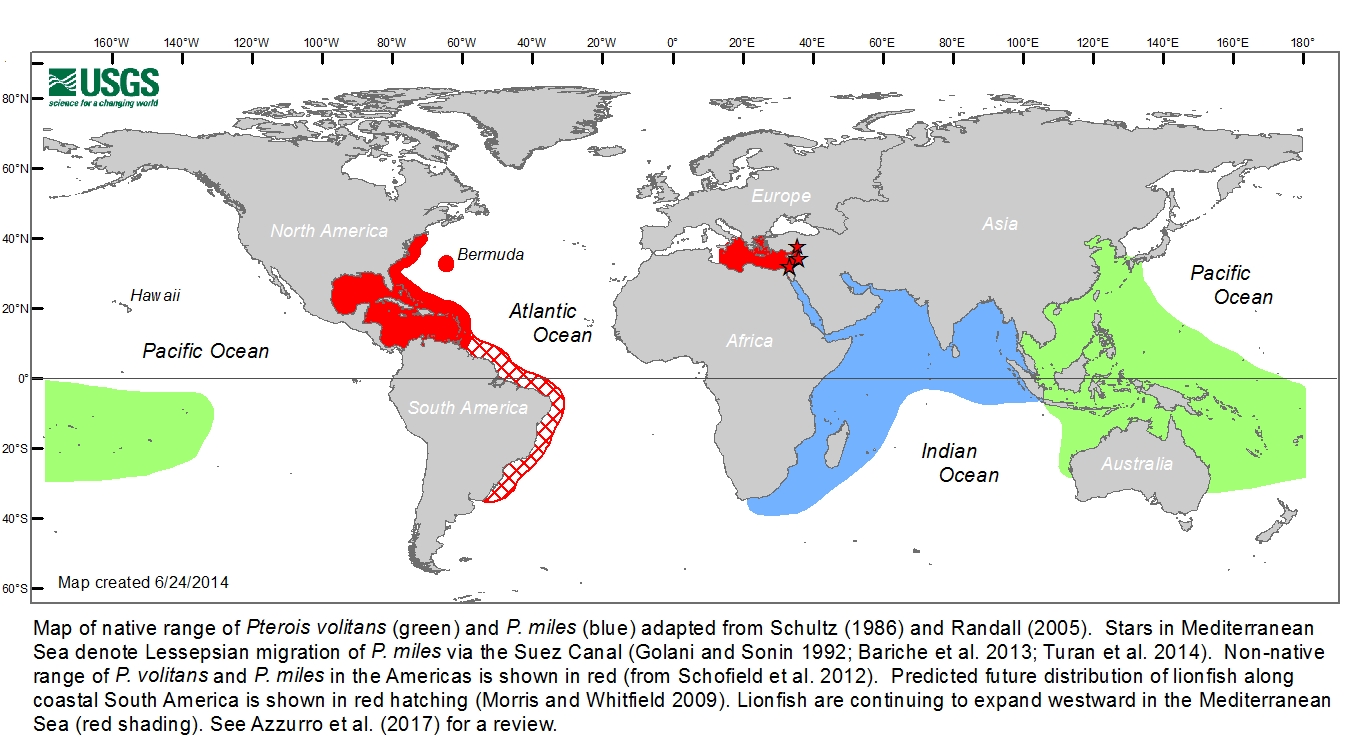
Map showing the worldwide distribution of the lionfish.©U.S. Geological Survey


The red lionfish is native to the indo-pacific region but has found its way into unwanted waters such as the Atlantic, closer to North America (spotted in 2002), the Gulf of Mexico, the Caribbean Sea, spotted in countries such as: Cuba (2007), Jamaica (2008) and Trinidad and Tobago (2010). The lionfish is regarded as one of the most beautiful additions to any household aquarium. Scientists speculate that the dumping of the lionfish into waterways via the aquarium trade is one of the main modes of introduction of this species into non-native areas. 


What makes this particular IAS so successful?


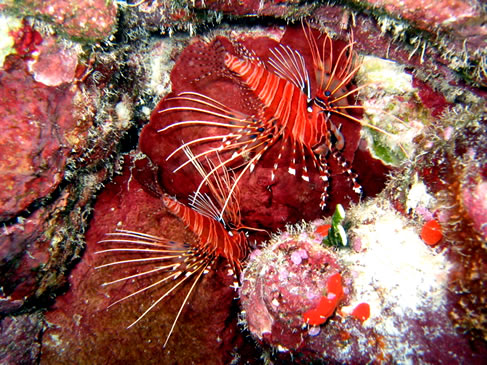
The red lionfish camouflaging in its natural habitat (the coral reef) using its
striped color.  ©The University of Wisconsin
As an IAS in new territory, the local organisms don't stand a chance against these predators. Due to its striped color and presence of multiple venomous dorsal spines, local organisms know to stay away. The fact that this species has no known predators in these new areas, coupled with the idea that there are no evolutionary predator-prey relationships developed (Saunders, 2015) to keep the ecosystem in check, the red lionfish can multiply rapidly without hindrance.  

Impact


The ferocious lionfish has the ability to severely impact coral reef ecosystems negatively. By disrupting the stability of the ecosystem and rapidly declining local fish populations, this directly impacts the fishery and tourism sectors of countries highly dependent on this resource. Hixon et al (2009) observed that this IAS has the ability to reduce juvenile fish populations up to 79% within a span of 5 weeks! The video below shows how the lionfish feeds and why it is capable of such devastation!


Methods of Mitigation

Lionfish being spearfished in Florida. ©National Geographic
Experts have agreed that this problem cannot possibly be eradicated, therefore population management should be of utmost importance (Spencer, 2013). One strategy currently being used by countries such as Florida and Trinidad and Tobago, is the commercialization of the lionfish by promoting spearfishing of the IAS. However, by reviewing history, environmentalist have taken a chapter out of the green mussel story and have again appealed to the over exploitative nature of humanity, by adding this apex predator to the local cuisine! By encouraging chefs and restaurants to use these organisms in their menu, these countries hope to gain money while solving a huge problem. 
Lionfish cuisine being promoted in a restaurant. ©Erin Spencer

Friday, 16 October 2015

The Green Mussel

Hola! Bonjour! Hi :D. This week we look at yet another marine IAS, the green mussel (scientific name: Perna viridis). 
©U.S. Geological Survey 
 
Distribution

Worlwide Distribution of the Perna Viridis. ©Cabi.org

This particular bivalve originated on the coasts of the Indo-Pacific and Asia-Pacific regions. However, within the 1990s and the early 2000s this species found its way thousands of miles away from its home. In coastal areas like Japan, North and South America, Australia and even Caribbean islands such as Jamaica and Trinidad and Tobago. This bivalve's main mode of transportation was through ballast water from ships and the attachment of adult mussels on the hulls of ships. 

Image showing how ballast water disperses foreign material and organisms. ©Shipsan.eu

What made this particular IAS so successful?

  • Can exist in a wide temperature range and salinity range, from 10-42°C and 18-33ppt respectfully. These physical traits gives the green mussel such a high tolerance range. 
  • High range of tolerance to pollution. 
  • They grow rapidly in dense colonies. Population densities of 39,500 individuals per square meter have been recorded (Lalla, 2015).
Impact

As an IAS, this bivalve has negatively impacted several areas economically and environmentally. From an economic perspective, large colonies of this species can cause problems for power plants that utilize sea water cooling systems. Neitzel et al. (1984) explained that not only does it block the passage of water resulting in mechanical damage to the pumps, but it also reduces the transfer of heat. 

Clogging of a power plant filter by the green mussel. ©The University of Florida


It has also caused the clogging and corrosion of condenser tubes. The abundance of problems caused by Perna Viridis results in high maintanence costs for power plant managers. The growth of colonies on the hull of ships is an added maintenance cost to ship owners. Environmentally, the bivalve causes problems due to its high reproductive capacity which results in the out-competing of local organisms for space and food. 

Methods of Mitigation

Like any other marine animal, the main way to get rid of the problem, is to eat it! Several countries impacted by the green mussel invasion including Trinidad and Tobago, Japan and many others have commercialized the green mussel by advertising cooking recipes and uses in culinary practice. Currently, recipes can be found can be found on famous websites such as foodnetwork.com and livestrong.com. The problem therefore, has been controlled by appealing to the over-exploitative nature of humans.  


Example of green mussel being used in culinary practice. ©Tampa Bay Times

Friday, 9 October 2015

Killer Algae - The Beautiful Nightmare

Hola! Bonjour! Hi :D. This week we take a look at one of the most devastating marine IAS, the killer algae (scientific name: Caulerpa taxifolia).  

Image Copyright The University Of Hawaii
Don't be fooled by Caulerpa taxifolia's beautiful appearance. It's only beautiful on the outside!
Origin

Location of the origin of the "killer algae." Image Copyright Google Maps
With such a name as "killer algae", one would suspect that this resulted from a lab experiment gone wrong. Ironically enough it did ! In the 1970's aquarium fanatics and scientist from all over the world were trying to develop an ornamental plant beautiful enough to decorate aquariums. However, scientists at the Saltwater Aquarium at the Wilhelma Zoo in Stuttgart Germany were successful in doing so ! After several tests were done on this strain of algae, the scientists concluded that this plant would revolutionize the salt water aquarium industry due to its bright green color and high tolerance level. Little did they know they had concocted a vile mutation of the Caulerpa taxifolia ! They shipped it several institutes including an oceanic museum in Monaco where it was first sited in the natural environment.  

Current Distribution
  • Mediterranean Sea
  • Southern California 
  • Australia 

Characteristics That Make This Organism So Successful


Tolerance Level : Highly tolerant in nutrient deprived areas along with highly polluted environments. Can even survive out of water for 10 days ! Can survive in a relatively wide range of salinity and varying temperatures (from tropical to temperate). 

Reproduction: Fragmentation. Can multiply rapidly from the tiniest fragment of the organism and smother whole coral ecosystem or sea grass beds within a matter of years!
Caulerpa taxifolia smothering a Coral Ecosystem. Image Copyright Alexandre Meinesz. 
How did this strain of algae get into the natural environment?
The main cause of introduction into the natural environment was the dumping of this beautiful nightmare from aquariums. Even the tiniest piece of this algae has the reproductive ability to multiply from a small patch of a square meter to several acres in just a few years. Additionally one of the usual vectors which aid in the spread of exotic species is ballast water from ships involved in transport. This was the case in the Oceanic Museum in Monaco. From the Mediterranean sea it has multiplied and traveled great lengths to reach as far as South California and even Australia ! 


Impact
Due to its reproductive ability, the killer algae rapidly multiplies and displaces local sea grass beds. By displacing the sea grass beds, which were commonly eaten by the local biodiversity, it dramatically disrupts the whole dynamic of the  local marine ecosystem. An additional characteristic of this organism is that it contains toxins that are harmful to certain species of fish ! Who thought this thing could get any worse? With the presence of toxins, there is also the possibility of bio-magnification where the concentration of this toxin increases up the food chain.  This impact has severely affected the ecosystems of not only the Mediterranean, but also South California and Australia. This is not centralized to that of a biological viewpoint but can also be assessed based on its economic impacts. The disruption of the marine ecosystem directly affects the fisheries sector of the economy. Also the cost of mitigation usually costs millions of dollars. 

Methods of Mitigation
Currently, the distribution of this green menace is so widespread that mitigation is a big undertaking. However, one of the main methods of mitigation used by the governments of the previously mentioned areas is public education. This tactic doesn't directly remove the current algae from the water, but with proper knowledge of how to deal with aquarium waste water will significantly reduce future spread of the current problem. The National Sea Grant has outlined several ways the public can aid in the spread of the problem: 

  • Never dump unwanted aquarium water into the ocean. Freeze it for 24 hrs and dump in a landfill.
  • Reporting sightings of this algae to the relevant authorities.
  • Educate yourself about the Caulerpa taxifolia.
Apart from social mitigation of the problem, countries such as the U.S. have developed physical methods to remove the algae from the water. In this scenario, they cover a colony of the algae with big tarps to block out sunlight. Next they add chlorine to kill the organism under the tarp along with whatever biodiversity that got trapped under there. took them This method was seen as effective in eradicating the pest for the United States, however, it costed over $7 million US dollars during the period of 2000-2005. 

The following video outlines the method of removal used by the US: 


Friday, 2 October 2015

About My Blog and I

Hola! Bonjour! Hi :D, new blogger in the blogisphere! Uh....Where do I Start ? Oh right! Let me introduce myself, My name is Damian Clarke. I'm from the Caribbean, Trinidad and Tobago to be specific. 18 years of age. Yeah....i'm young but as Willie Stargell once said : "That's where the future lies.....in the youth of today!" I'm currently in the St. Augustine Campus of University of the West Indies doing a BSc in Environmental Science and Sustainable Technology. In the future, I intend to work for the United Nations by spearheading new innovations in environmental sustainability. I prefer to work in silence and let my success do the talking. In doing this I fulfill the motto of my scout troop....DEEDS NOT WORDS. But anyway......enough about me. Here's a little introduction to what you will be looking forward to in this fascinating blog : 

Worldwide the problem of invasive species has been one of the prime factors affecting the marine environment! This problem directly affects the biodiversity and in essence the ability of marine ecosystems to thrive. This blog will entail weekly updates outlining several locations where these species have affected the ecosystems and what different countries have done/will do to mitigate the problem.